



If you’ve ever stared at your savings account earning 0.5% interest while inflation eats away at your purchasing power, you’ve probably wondered about investing.
But where do you even begin?
The questions that keep people up at night aren’t about advanced trading strategies – they’re much more basic
As part of our series tackling the most searched finance questions, we’re diving into the three concerns that stop most people from ever starting their investment journey.
These aren’t just theoretical problems; they’re the practical barriers that keep millions of dollars sitting in savings accounts instead of growing wealth and starting investing!
The 3 Most Asked Questions About Starting Investing
1. “What’s the Difference Between Saving and Investing?”
Saving is for preservation and short-term goals. When you save money, you’re prioritizing safety and liquidity over growth. Your money stays the same amount (plus minimal interest), and you can access it quickly when needed.
Investing is for growth and long-term goals. When you invest, you’re accepting some risk in exchange for the potential of significantly higher returns over time. Your money’s value will fluctuate, but historically has the potential to grow substantially over years and decades.
This question tops search results because the line between saving and investing feels blurry, especially when both involve putting money aside for the future. Understanding the distinction is crucial for building a solid financial foundation.
Key Differences:
Time Horizon:
- Savings: 0-5 years (emergency funds, vacation, down payment)
- Investing: 5+ years (retirement, long-term financial independence)
Risk Level:
- Savings: Very low risk, FDIC insured up to $250,000
- Investing: Higher risk, no guarantees, but potential for much higher returns
Returns:
- Savings: 0.5-5% annually (current high-yield savings rates)
- Investing: Historically 7-10% annually for stock market (with significant year-to-year variation)
Real Example: Susan has $10,000. She keeps $3,000 in a high-yield savings account for emergencies (earning about 4.5% annually), $2,000 in a separate savings account for a vacation next year, and invests $5,000 in a diversified portfolio for retirement in 30 years.
The 50/30/20 Rule Integration: Within the traditional 50/30/20 budget framework, your 20% savings should be split between actual savings (emergency fund, short-term goals) and investing (retirement, long-term wealth building).
A common split is 5-10% to savings accounts and 10-15% to investments, depending on your emergency fund status.
2. “How Much of My Income Should I Be Investing?”
Start with the foundation first. Before investing any money, ensure you have:
- $1,000 minimum emergency fund
- High-interest debt paid off (credit cards, personal loans above 7-8% interest)
- Employer 401(k) match maximized (this is free money)
This question reflects a fundamental anxiety: investing too little means missing out on growth, but investing too much could leave you cash-poor for life’s unexpected expenses.
The Progressive Investment Strategy:
Beginner Level (0-6 months): 5-10% of gross income
Start small to build the habit and learn how markets work. If you earn $50,000 annually, this means $2,500-5,000 per year, or roughly $200-400 monthly.
Intermediate Level (6 months-2 years): 10-15% of gross income
As you become comfortable with market fluctuations and your emergency fund is solid, increase your investment rate.
Advanced Level (2+ years): 15-20%+ of gross income
Experienced investors often aim for 15-20% or more, especially if they want to retire early or have aggressive wealth-building goals.
Real Example: Mike earns $60,000 annually. His progression:
- Year 1: Invests 5% ($3,000) while building emergency fund
- Year 2: Increases to 10% ($6,000) after emergency fund is complete
- Year 3: Reaches 15% ($9,000) as his comfort level and income grow
Age-Based Guidelines: Some experts suggest saving/investing your age as a percentage. At 25, aim for 25% total savings rate (including both savings and investments). At 35, aim for 35%. This accounts for increasing income and decreasing time until retirement.
Income-Specific Considerations:
- Low income ($30,000-40,000): Focus on 401(k) match first, then 3-5% additional investing
- Medium income ($40,000-80,000): Aim for 10-15% total investment rate
- Higher income ($80,000+): Consider 15-20%+ to maximize wealth-building potential
For detailed strategies on optimizing your savings rate, check out our comprehensive guide on emergency fund basics.
3. “How Do I Know What to Invest In/What’s the Best Way to Get Started?”
The simple truth: Most successful investors use boring, diversified strategies. You don’t need to pick individual stocks or time the market. The most effective approach for beginners is broad market index funds.
This question paralyzes more potential investors than any other. The investment world seems designed to confuse beginners with thousands of options, conflicting advice, and fear of making expensive mistakes.
Step-by-Step to Starting Investing Guide:
Step 1: Choose Your Account Type
- Roth IRA: Best for most beginners. Contributions are after-tax, growth is tax-free. 2024 limit: $7,000 annually
- Traditional IRA: Tax deduction now, pay taxes in retirement
- Taxable Investment Account: No contribution limits, but no special tax advantages
Step 2: Select a Brokerage
Top beginner-friendly options:
- Fidelity: $0 minimums, excellent customer service
- Vanguard: Low-cost index fund pioneer
- Charles Schwab: Great tools and research
- Robo-advisors: Betterment, Wealthfront for hands-off investing
Step 3: Choose Your Investments
Beginners: Target-date funds
- Automatically diversified across thousands of stocks and bonds
- Adjusts risk level as you age
- Example: Vanguard Target Retirement 2065 Fund (VLXVX)
Slightly More Advanced: Three-fund portfolio
- Total Stock Market Index (70%): Vanguard Total Stock Market (VTI)
- International Stock Index (20%): Vanguard Total International Stock (VTIAX)
- Bond Index (10%): Vanguard Total Bond Market (BND)
Step 4: Automate Everything Set up automatic monthly contributions. Start with whatever you can afford – even $50 monthly builds the habit and gets you started.
Real Example: Jennifer, 28, started with:
- Opened Roth IRA at Fidelity
- Chose Fidelity Freedom 2065 target-date fund
- Automated $300 monthly contributions
- After one year, had invested $3,600 and learned enough to feel confident increasing her contributions
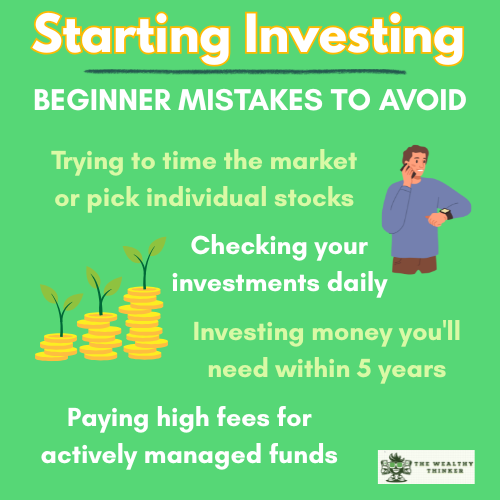
Common Beginner Mistakes to Avoid:
- Trying to time the market or pick individual stocks
- Checking your investments daily (leads to emotional decisions)
- Investing money you’ll need within 5 years
- Paying high fees for actively managed funds
- Stopping contributions during market downturns
Dollar-Cost Averaging Advantage: By investing the same amount monthly regardless of market conditions, you automatically buy more shares when prices are low and fewer when prices are high. This strategy removes the pressure of trying to time the market perfectly.
Your Next Steps to Starting Investing
These three questions represent the foundation of successful investing:
- understanding the purpose
- determining the amount
- choosing the method
The key insight is that you don’t need to become an expert before starting – you need to start to become an expert.
This Week’s Action Items:
- Calculate how much you can realistically invest monthly (start small if needed)
- Choose a brokerage and account type
- Set up automatic contributions to a target-date fund
- Commit to not checking your investments for the first three months
Remember: The biggest risk isn’t choosing the wrong investment – it’s not investing at all. Every month you wait, you lose the power of compound interest. A simple, automated approach beats perfect timing or complex strategies.
The market will go up and down, but your consistent contributions and long-term focus will smooth out the volatility and build wealth over time. Start with what you have, where you are, and improve your strategy as you learn.
Stay tuned for our next installment in this series, where we’ll tackle the most asked questions about debt management and credit optimization.