



Building your emergency fund is very important.
However, it’s an area where tens of millions of Americans are struggling.
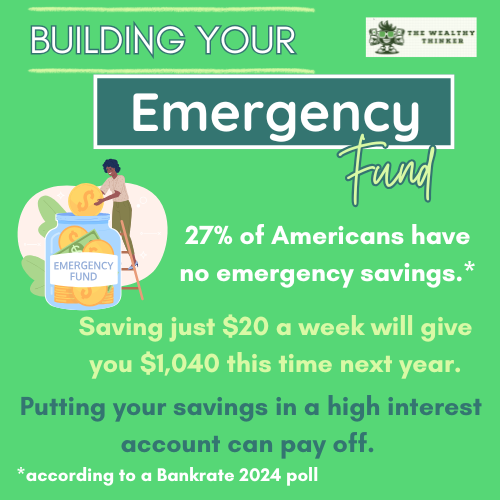
According to a May 2024 Bankrate poll, 27% of American adults asked had no emergency savings at all.
A notorious question by the Federal Reserve’s Economic Well-Being of US Households Research & Analysis asks:
Would you be able to cover a $400 emergency expense completely using cash or its equivalent?
37% of those asked said they would not be able to do so, but could cover it by other means. 13% said they wouldn’t be able to pay that amount by any means.
$400 isn’t a lot of money when it comes to most serious emergencies. This raises several significant questions about the state of individual personal finances:
- How much do you need to have saved for an emergency?
- What stops people from building emergency savings?
- How do you build emergency savings under financial pressure?
- Where do you leave your emergency cash?
Let’s jump right in.
How Much Do You Need to Save for an Emergency Fund?
The necessary size of an emergency savings fund should vary according to:
- Your current financial needs and lifestyle
- Your dependent family members (and other dependents)
The key rule of thumb here is not a solid amount. In fact, it’s better to base it on the amount you would need to continue functioning financially if you had to stop working. Most financial advisors say you should save somewhere from three to six months’ worth of expenses in an emergency fund.
The above timeframe is only part of the equation, however.
Based on the unpredictable nature of emergencies, a better-rounded plan would include:
- At least $1,000 for the immediate expenses when an emergency takes place
- At least 3 months’ worth of expenses in case of an extreme emergency situation
Two emergencies will seldom cost the exact same amount.
For example, a typical emergency room visit in the US without insurance costs anywhere from $150 to $20,000, with the average cost coming in at $2,100. In the case of a severe medical emergency requiring comprehensive or ongoing care, the cost can exceed $20,000.
Of course, having health insurance can help reduce or eliminate the expense. But then there are other issues you must consider depending on the scope of your coverage. Considerations like these should be added on top of the basic emergency fund guidelines listed above.
In the end, it’s your responsibility to account for your unique circumstances. As a side note, strong insurance policies that are appropriate for the level of risk in your life should be considered ahead of specific emergency fund needs.
After that, emergency funds can offer an added financial buffer for the expenses that slip through the cracks or simply can’t be covered. Some of the costs of an emergency may be secondary to medical bills or similar expenses.
However, those costs add up, which is why at least $1,000 and a few months’ expenses should be saved up as well.
Emergency Fund: 4 Basic Tasks Will Help You Know How Much You Need
What Stops People From Saving For An Emergency?
There may be several potential causes of a lack of basic emergency savings. The most cited reasons are closely related to debt.
When managing their personal finances, many people simply end up using money they would normally use to save to pay back debts. If you’re about to put aside some emergency money, it’s simply harder to do when you have a credit card balance to pay.
High-interest debts are particularly daunting in how they can obstruct savings. With interest rates that often exceed 24%, you do not want to miss a credit card payment.
Another common debt that gets in the way of any kind of saving is student loan debt.
When you look at all student loans, the average interest rate is 7.9%. This is a low rate when compared to credit card debt, but it’s a consistent, necessary, and rising cost of post-secondary education.
If you have a lot of debt, the unfortunate reality is that it will probably get in the way of saving plans. As such, tackling debt, wherever possible, must, unfortunately, be a primary consideration.
How to Start an Emergency Fund
Building your emergency fund is all about budgeting.
The way to start one is to temporarily adjust your budget to fit in emergency savings.
The share of your budget for emergency savings can and should be as big or small as you find workable. There is no point in being too ambitious with the size and timing of emergency funds.
You need emergency money, but not at the expense of any other area of your budget covering necessities.
Read this next: Personal Finance for Everyone: A Step-by-Step Guide to Budgeting and Money Management
How Long Does It Take When You’re Building Your Emergency Fund?
If you were to set aside just $20 per week for emergency savings, it would take you just under a year to have a $1,000 emergency savings fund.
If you have more money to spare, it would be wise to set more aside to build up your savings faster. While it’s unwise to rush, there is no way to know when an emergency will take place and when you’ll need the money.
But when an emergency does strike, it’s better to have half of your emergency savings goal than to have nothing.
Like every other area of emergency savings, or budgeting more broadly, this is a question of your own needs and goals.
To make matters simpler and strain your budget less, a good rule of thumb is to simply make a habit of maintaining emergency savings over time. If you only have $10 per week to contribute to it, it’s still money well saved.
Where to Put Your Emergency Fund
It’s best to put an emergency fund somewhere that is safe and easily accessible.
A strong candidate for your emergency fund’s location would be a high-interest savings account.
Since you don’t want to touch your emergency fund until you need it, segregating the money in a separate account makes sense. Another benefit of high-interest savings accounts is that your balance will at least partially keep up with inflation.
You can just leave the fund alone to maintain itself as you shift your focus to other financial goals.
Building Your Emergency Fund: Conclusions
Emergency saving funds are completely unnecessary in your day-to-day life; until an emergency suddenly strikes.
Emergencies are another part of life that no one likes, but which none of us can entirely avoid. So, the best thing to do is be prepared for them in whatever way you can be.
Building your emergency fund can be approached in a slow and thoughtful way, if need be.
It’s better to save a little bit at a time than to forgo emergency savings entirely. If you’re a part of the 27% who aren’t financially prepared for even a minor emergency, it’s just worth it to take whatever action you can to change that.
Editor’s note: This article was originally published Sep 25, 2023 and has been updated to enhance reader experience.