



Warren Buffett is one of the most successful investors in the world, and while his financial strategies get most of the attention, his daily habits are just as telling.
They reveal a mindset built around discipline, simplicity, and long-term thinking – things that any one of us can learn from, even without billions in the bank!
9 Daily Habits of Warren Buffett That Can Boost Your Own Success
1. He Orders McDonald’s Based on the Market
Every morning, Warren Buffett drives himself to McDonald’s and chooses his breakfast depending on how he feels the market is doing.
On down days, he opts for a cheaper meal. On better days, he might spring for bacon and eggs. This habit was documented in the HBO film Becoming Warren Buffett.
Lesson: Buffett starts his day with consistency – but also mindfulness.
His breakfast isn’t just about food; it’s a tiny reflection of the financial world he lives in and his mood toward it. Small rituals, for him, are symbolic.
How to apply: You don’t need to change breakfast every day based on your investment portfolio, but you can build intentional rituals into your morning.
Choose something consistent – making your own coffee, budgeting your breakfast, or reading the headlines – that helps you approach your day with focus.
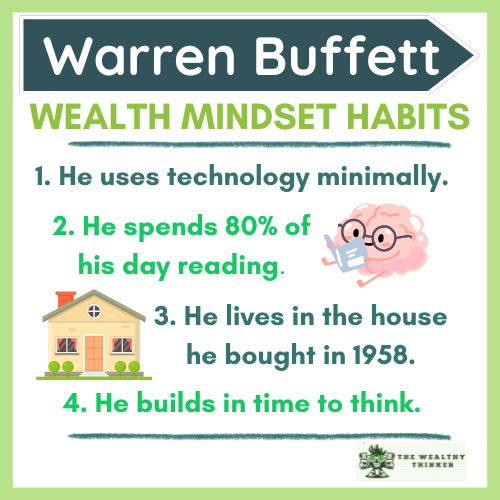
2. He Spends 80% of His Day Reading
Buffett has said he reads 500 pages a day, spending the majority of his time reading newspapers, company reports, and books.
He’s described this habit as “How knowledge works. It builds up, like compound interest.”
Lesson: The more informed you are, the better decisions you make. Buffett doesn’t rush – he prepares. Reading is a form of mental training that adds up over time.
How to apply: Set a goal to read 30 minutes a day. Start with topics related to your work, personal finance, or self-improvement. Don’t worry about 500 pages – just build a habit.
Use newsletters, audiobooks, or podcasts if sitting down with a book isn’t practical for you.
The Top 7 Best Personal Finance Books for Beginners
3. He Still Lives in the House He Bought in 1958
Buffett purchased his Omaha home for $31,500 in 1958 and has lived there ever since. Despite his net worth, he never upgraded to a mansion.
Lesson: Wealth doesn’t mean constant upgrades. Buffett focuses on value, not appearances. He lives comfortably but without excess.
How to apply: Think long-term about your housing and lifestyle. Don’t get caught up in image-based spending.
Stick with what meets your needs and use any extra to invest, save, or pay off debt. Keeping your overhead low gives you more freedom.
Mortgage Pre-Approval Smart Tips – Why You Should Not Spend the Max Amount
4. He Uses Technology Minimally
Buffett used a flip phone until 2020 when Tim Cook himself gave him an iPhone. He doesn’t use email much and keeps his tech use simple.
Lesson: Buffett prioritizes mental clarity over digital distraction. He doesn’t chase every new app or platform.
How to apply: Take control of your screen time. Turn off non-essential notifications. Set time limits on distracting apps. Use your phone as a tool – not a source of stress or comparison.
5. He’s Committed to Giving His Wealth Away
Buffett has pledged to donate 99% of his wealth to philanthropy, mostly through the Gates Foundation. He co-founded The Giving Pledge to encourage other billionaires to do the same.
Lesson: Purpose matters. For Buffett, financial success comes with the responsibility to give back.
How to apply: You don’t need billions to be generous. Set aside a small monthly donation, volunteer your time, or support local causes. Consistency matters more than size. Giving can be part of your values – even on a budget.
The Financial Benefits of Giving Back: Can Philanthropy Improve Your Wealth & Well-being?
6. He Eats Simply and Repetitively
Buffett’s diet includes Coca-Cola, ice cream, and fast food. He once said,
“I checked the actuarial tables, and the lowest death rate is among six-year-olds. So I decided to eat like a six-year-old.”
Lesson: He doesn’t overcomplicate daily decisions. His routines free up mental energy for bigger ones.
How to apply: Meal prep, simplified routines, or set “defaults” can help reduce decision fatigue. Eat what works for your lifestyle, and don’t feel pressure to follow every trend. Structure can lead to better focus.
7. He Builds in Time to Think
Buffett avoids overloaded schedules. He has said,
“You’ve got to keep control of your time, and you can’t unless you say no—you can’t let people set your agenda.”
Lesson: Strategic thinking requires space. Buffett protects his time so he can think clearly.
How to apply: Carve out quiet time in your week – no meetings, no scrolling, no multitasking. Use it to journal, review goals, or brainstorm. Even 30 minutes a week can help reset your focus.
8. He Plays Bridge Regularly
Buffett plays bridge several times a week, often with Bill Gates. He’s said he would play “every day if I had the time.”
Lesson: Buffett values activities that keep him mentally sharp and socially engaged.
How to apply: Prioritize hobbies that challenge your brain – like chess, crosswords, or strategy games. It’s not just about fun; it’s about keeping your mind active.
9. He Builds Lifelong Partnerships
Buffett’s decades-long relationship with Charlie Munger is central to his success. Their partnership is built on mutual respect, honesty, and trust.
Lesson: Relationships built on shared values are worth maintaining. Buffett doesn’t jump from one connection to the next – he invests in people.
How to apply: Look for mentors, collaborators, or friends you can grow with over time. Trust and consistency go a long way. Keep in touch, communicate clearly, and build a foundation for lasting success.
Daily Habits of Warren Buffett: Final Thoughts
The daily routines and habits of Warren Buffett provide invaluable lessons in focus, discipline, and strategic thinking.
While not everyone can replicate his wealth, the principles behind his actions are accessible to anyone looking to improve their financial mindset.
- prioritizing knowledge
- maintaining simplicity
- fostering lifelong relationships
- practicing humility
By adopting even a few of these habits, you can begin to see shifts in your own financial habits and mindset.
Remember, the key isn’t in copying Buffett’s exact routine, but in finding the practices that work for you, align with your values, and help you reach your goals.
Whether it’s developing a reading habit, managing your time more effectively, or building strong partnerships, applying these principles can help lay the foundation for long-term success.
Start small, stay consistent, and like Buffett, embrace the power of compounding – whether it’s in your knowledge, relationships, or investments.