



Generation X, often caught between the self-assured Baby Boomers and the dynamic Millennials, carves its own unique niche within the professional ecosystem.
Born between 1965 and 1980, this generation bridges traditional and contemporary practices, adapting swiftly from analog to digital realms.
This article delves into the distinctive traits of Gen Xers and their profound influence on the modern workplace, demonstrating their critical role in evolving work cultures.
Generation X continues to play a crucial role in shaping contemporary work environments, offering resilience, experience, and a knack for mediation.
Generation X Key Characteristics
Independence and adaptability define Generation X.
Dubbed the ‘latchkey’ generation; they were the first to exhibit high levels of self-sufficiency, a trait that translates into their work ethics. They are not just survivors but adapters, skilled at navigating the rapid shifts from analog to the digital age.
The Bureau of Labor Statistics notes that Gen Xers are more likely to stay with an employer for over five years compared to Millennials, indicating their balanced loyalty and desire for stability.
Gen X’s approach to work is notably pragmatic. They prioritize results but also value efficiency, often seeking the most effective route to achieve objectives without fanfare.
Workplace Preferences
For Generation X, the ideal workplace is one that values transparency and results while supporting work-life balance.
They pioneered the integration of life and work in ways that went beyond the rigid frameworks of their predecessors. Gen Xers report greater satisfaction in jobs that offer flexibility—around 60% prefer telecommuting options, reflecting their desire for jobs that fit their life.
This generation’s communication style is direct yet flexible, appreciating both the quick connections enabled by email and the depth of face-to-face interactions.
Their adaptability makes them excellent collaborators and mediators between younger and older colleagues, capable of bridging varied communication styles.
Adoption of Technology
Generation X’s relationship with technology is characterized by cautious integration.
Having witnessed the inception and evolution of the digital age, they adopt new tools that enhance productivity, but are wary of technologies that may complicate the workplace.
This selective adoption ensures they use technology effectively, integrating new systems that provide clear benefits in efficiency and connectivity.
Despite not being digital natives, Gen Xers have shown significant adaptability and competence with technological innovations.
They are often the ones who help bridge the gap between the more traditional approaches of the Baby Boomers and the tech-first strategies of Millennials and Gen Z.
This generational cohort tends to prefer technology that serves a functional purpose, such as enhancing communication or streamlining workflows, rather than adopting tech for its own sake.
This pragmatic approach to technology adoption makes Gen X critical players in digital transformation initiatives within organizations, ensuring that new technologies align with business goals and genuinely add value.
Challenges Faced by Generation X
Despite their substantial contributions, Gen Xers often encounter career stagnation.
Gen X’s advancement opportunities can be limited with Boomers delaying retirement and Millennials rapidly ascending corporate ladders.
Research reveals that 45% of Gen Xers feel overlooked for promotions, which they attribute to the overwhelming focus on developing Millennial potential.
Many Gen Xers are in the “sandwich” life stage, supporting both aging parents and growing children. This dual responsibility can strain both financial resources and work-life balance, impacting their professional focus and advancement.
Key Takeaways
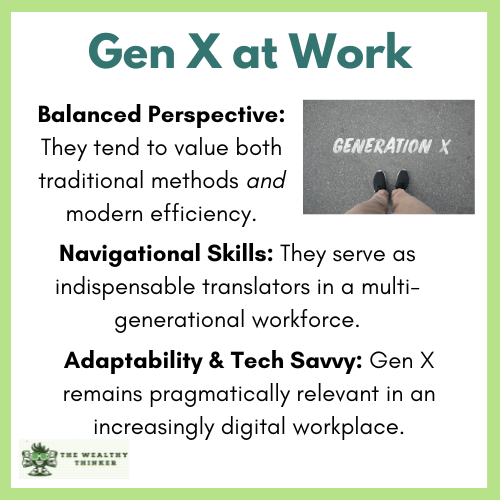
- Balanced Perspective: Gen X brings a balanced perspective to work, valuing both traditional methods and modern efficiency.
- Mentorship and Stability: With robust industry knowledge, they provide stability and mentorship, guiding younger professionals through complex workplace dynamics.
- Navigational Skills: Their capacity to navigate between significant technological eras positions them as indispensable translators in the multi-generational workforce.
- Facing Ageism: Challenges like ageism and career stagnation are significant, but are met with resilience and strategic planning.
- Adaptability and Tech Savvy: Their pragmatic use of technology ensures that Gen X remains relevant in an increasingly digital workplace.
Final Thoughts
Generation X continues to play a crucial role in shaping contemporary work environments, offering resilience, experience, and a knack for mediation.
As they progress into more senior positions, their influence is set to further redefine workplace norms and policies, advocating for flexibility and efficiency that supports a diverse workforce.
Embracing and leveraging Generation X’s strengths not only enhances organizational culture but also drives innovation and growth in an era of rapid change.