



For anyone who has ever gone through the process of booking travel knows how daunting it can be – and man, does everything add up.
From all the add-ons that come with checked bags and seat selection to what can seem like astronomical differences in price when you fly or visit certain times of year, figuring out your travel budget can seem impossible.
But! If you’re willing to adopt a smart money mindset when you’re next booking travel, you’ll notice there are some truly helpful ways to get around some of these issues.
All it takes is some strategic planning, willingness to be open on when you travel and where you land and testing alternatives for packing, using points and trying apps.
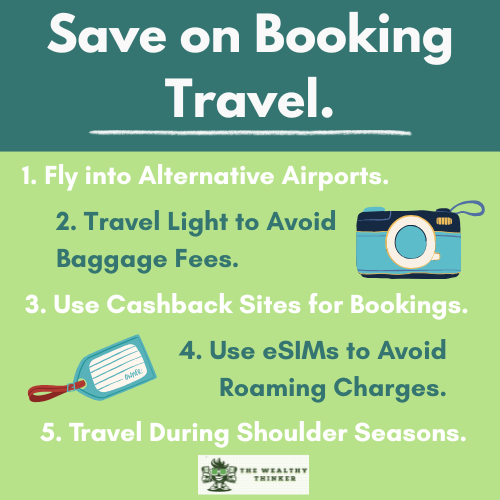
Smart Money Mindset | 10 Surprising Ways to Save Money When Booking Travel
1. Fly into Alternative Airports
One of the most overlooked money-saving strategies is choosing nearby alternative airports over major hubs. The savings can be substantial, particularly for families.
“Flying into or out of nearby airports is a smart way to find better flight deals and potentially save on airfare.” (Travel and Leisure).
This strategy works because smaller airports often have less congestion and lower landing fees, which airlines pass on as savings to passengers. Consider these alternatives:
- Tampa instead of Orlando
- Providence instead of Boston
- Oakland instead of San Francisco
- Fort Lauderdale instead of Miami
Factor in ground transportation costs when comparing, but even with added travel time, the savings often justify the slight inconvenience.
2. Travel Light to Avoid Baggage Fees
Baggage fees have become a significant revenue source for airlines, but they’re completely avoidable with smart packing strategies.
“Packing smartly to avoid checked baggage fees… can save money”, advises the Conde Nast Traveler team (Conde Nast Traveler).
Beyond the immediate fee savings (which can range from $30-100+ per bag), traveling light offers additional benefits:
- No waiting at baggage claim
- Reduced risk of lost luggage
- Easier navigation through airports
- More flexibility with connecting flights
Invest in versatile clothing pieces and pack items that serve multiple purposes to maximize your carry-on space.
3. Utilize Cashback Sites for Bookings
Cashback sites transform necessary travel expenses into opportunities to earn money back.
“Rakuten is my favorite way to earn cash back on everything from hotels to travel gear”, says The Budgetnista.
Popular cashback platforms include:
- Rakuten (US)
- TopCashback (US/UK)
- Quidco (UK)
- Honey (browser extension)
The key is remembering to start your process for booking travel through these platforms rather than going directly to travel sites. Cashback rates typically range from 1-8% on travel purchases, which can add up to significant savings on expensive trips.
The 9 Best Cash Back Apps to Save Money
4. Use eSIMs to Avoid Roaming Charges
International roaming charges can add hundreds to your travel bill, but modern technology offers an elegant solution.
“The beauty of an e-Sim is you can use both plans simultaneously,” explains Blogger at Large.
eSIMs (embedded SIMs) allow you to purchase local data plans digitally without physically swapping SIM cards. Popular eSIM providers include:
- Airalo
- Holafly
- Nomad
These typically cost $10-50 for a week of international data, compared to roaming charges that can exceed $10 per day with traditional carriers.
5. Redeem Loyalty Points for Travel Expenses
Loyalty points often provide better value when used for booking travel, rather than merchandise or statement credits.
“Travel points earned via loyalty programs and credit cards vary in value but are a good way to cut vacation costs,” explains Nerd Wallet.
Strategic point redemption includes:
- Converting grocery store points to airline miles
- Using credit card points for hotel bookings
- Redeeming points during promotional periods for enhanced value
- Transferring points between partner programs for maximum flexibility
Research transfer ratios and promotional bonuses to maximize your points’ purchasing power.
6. Book Independently Using Comparison Tools
DIY travel planning often yields better results than package deals, especially when you know which tools to use.
“Travel comparison websites have emerged as trusty guides, helping travelers sift through the overwhelming options available for flights, hotels, and tours,” shares Strikingly.
Essential comparison tools include:
- Google Flights for airfare
- Skyscanner for comprehensive flight options
- Booking.com and Hotels.com for accommodations
- Kayak for package comparisons
Booking directly with airlines and hotels after comparing prices often provides additional benefits like free cancellation, room upgrades, or loyalty program perks that third-party sites can’t offer.
7. Travel During Shoulder Seasons
Timing your travel strategically can dramatically impact costs across all categories.
“Avoiding peak months and hitting shoulder season can earn you lower prices on some of the highest travel costs, including airfare and hotel accommodations,” advises AOL Travel (AOL).
Shoulder season benefits include:
- Airfare savings of 20-50%
- Hotel rates reduced by 30-60%
- Fewer crowds at attractions
- Better availability for tours and restaurants
Research your destination’s shoulder seasons, which typically fall between peak tourist periods and offer the best balance of good weather and lower prices.
8. Consider Self-Catering Accommodations
Dining expenses can quickly consume a travel budget, but accommodations with kitchens offer significant savings potential.
“Choosing self-catering apartments allows travelers to save on dining expenses by preparing their own meals,” notes The Sun Travel Team.
Self-catering strategies include:
- Shopping at local markets for fresh ingredients
- Preparing breakfast and lunch, dining out for dinner
- Cooking simple meals while experiencing local grocery culture
- Storing leftovers from restaurant meals
Even cooking just breakfast daily can save $20-40 per day for a family, adding up to hundreds over a week-long trip.
9. Use Travel Agents for Exclusive Deals
Despite the DIY trend, travel agents still offer value, particularly for complex trips or group travel.
“Booking with a travel agent can unlock exclusive deals and packages that might not be available online,” reports NerdWallet.
Travel agents excel at:
- Securing group discounts
- Accessing wholesale rates
- Providing crisis support and rebooking assistance
- Arranging complex multi-destination itineraries
- Leveraging industry relationships for upgrades
Consider agents for luxury travel, destination weddings, or trips involving multiple family members where coordination complexity justifies their fees.
10. Be Flexible with Travel Dates
Date flexibility remains one of the most powerful tools for travel savings.
“To cut costs, travel during the offseason, seek free attractions, book flights on weekdays, and consider negotiating in-person rates or volunteering at hostels,” suggests Investopedia
Flexibility strategies include:
- Using fare calendars to identify cheapest travel days
- Considering Tuesday, Wednesday, and Saturday departures
- Avoiding holiday weekends and school vacation periods
- Building trips around flight deals rather than fixed dates
Tools like Google Flights’ calendar view and Skyscanner’s “whole month” search reveal price patterns that can guide your scheduling decisions.
The Bottom Line on Saving When Booking Travel
Smart travel booking combines multiple strategies rather than relying on any single approach.
Start with flexible dates and alternative airports for foundational savings, then layer on cashback sites, loyalty points, and strategic accommodation choices.
Remember that the cheapest option isn’t always the best value. Consider the total cost of your trip, including:
- transportation to alternative airports
- the value of your time
- the quality of your travel experience
The goal isn’t necessarily booking travel as cheaply as possible, but to maximize the value of every dollar spent, allowing you to travel more frequently or enjoy enhanced experiences within your budget.
By implementing even half of these strategies, most travelers can reduce their travel costs by 25-40% without sacrificing comfort or experiences, money that can fund your next adventure or boost your savings account back home.