



Have you ever stopped to think about why you treat money the way you do?
We all have a relationship with our money, but we’re not always aware of what it is. This can get in the way of our success – and just be entirely frustrating.
We’ve talked about money personalities in the past. Now, we will elaborate by moving onto the broader concept of the psychology of money theory.
If you want to expand your knowledge in the area of financial psychology, read on.
What is The Psychology of Money Theory?
Disclosure: As an Amazon Associate, we earn a commission when you click the link and finalize a purchase (At zero cost to you.). We participate in programs like these to keep providing our readers free daily motivational content.
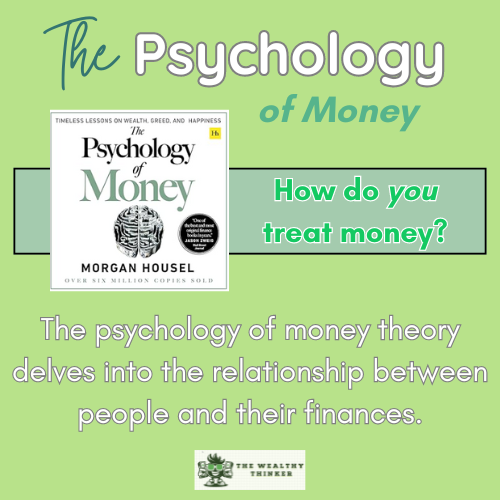
The psychology of money theory delves into the relationship between people and their finances.
It’s about the psychological relationship between an individual mind and their financial situation and well-being.
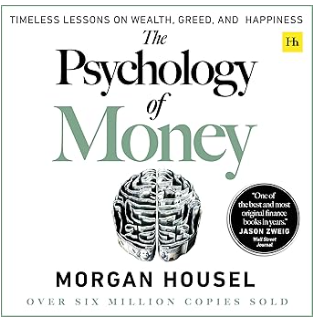
The psychology of money theory was laid out in the Morgan Housel book titled The Psychology of Money: Timeless Lessons on Wealth, Greed, and Happiness.
The basis of the psychology of money theory is that the way people think and feel about money, conceptually, is equally important to the amount of money they possess. Financial well-being is viewed in these terms, where psychology is a central part of it.
The 2020 book that popularized the theory follows in a long tradition of books covering similar topics.
This one covers a lot of ground, but we can look at the main points more directly. It’s a fresh take that treads new ground and thus deserves a focused investigation.
How do you understand a relationship with money?
Psychology of money theory follows the logic that if you want to understand the “why” of debt and poor budgeting, you need to look in the right place.
In this case, psychology is pointed to as a better explanation for these questions than other factors and economic indicators like interest rates.
The theory suggests that instead, it’s better to understand the psychology of insecurity, greed, pessimism, and optimism.
So, how is your relationship with your money?
Lessons and experiences.
First, the book covers external factors that shape an individual’s preconceptions of money.
These are cultural and social norms plus past experiences.
It makes sense; you learn about money from your family and your peers, lessons which are imbued with the cultural norms of wherever you grow up. Add your unique life experiences with money, and you have a financial-psychological profile.
These lessons and experiences are the best starting point for explaining why anyone feels and acts the way they do.
Your surroundings, whether you choose them or not, form your opinions. They create the internal story you tell yourself about money and your relationship with it. Crucially, they also set your expectations going forward.
Think about expectations:
- Parents’ financial positions and expectations
- Media messaging
- Stories you heard about money growing up
- Classroom lessons and gossip
- Culturally-ingrained ideas about prestige and social status
- Positive or negative financial events (winning a large prize or being faced with foreclosure, etc.)
Generational Money Mindset: How Family History Shapes Your Financial Future
Emotional creatures.
Emotions are crucial to consider and you’re never as logical as you think. You’ve probably heard this before, and it’s not unlikely you heard it in the context of finance.
This is a good second point to segue into because, if you think about it carefully, all the points listed above are not necessarily rational.
Our lives are full of bad math, unrealistic expectations, and other misconceptions or lies about how money works in our lives. These influences easily override our financial logic.
This is a condescending line of thinking, but unfortunately that doesn’t make it less true. The best thing anyone can do is simply admit that as a human, they are an emotional being. Accepting that fact makes life easier, and rejecting it makes you more vulnerable.
This second point covers all the emotional factors that go into your financial psychology. Think about:
- Fear of missing out (FOMO when investing)
- Greed
- Envy
All of this has to do with your status and the emotional implications it carries. These may sound like particularly insulting and negative claims, but consider that:
- They are the emotions covered in this and similar financial books
- They all affect us all to some extent even if we barely notice it
For example, envy purchases are common. Someone has something you think they are less deserving of than you are. So, you purchase something like that to not allow them to feel superior.
This kind of emotional decision-making happens all the time, despite how illogical it is. When we make these kinds of decisions, are we considering:
- Whether the other person is even acting financially logically?
- That we may not need, or even want, that item?
- That acquiring nicer things than other people have is of very limited use and doesn’t do anything to improve our financial futures?
Quantity matters.
But what about quality? One dollar is no better or worse than any other dollar, after all…
Where financial psychology comes into play is in the fact that psychology is at least as important as the amount of money you have in so many of the most crucial moments in our financial lives.
So, how much money you have is less important than your ability to manage it. This is why many people who come into wealth suddenly through something like inheritance or a winning lottery ticket don’t make the most of it.
In most cases, psychology plays a big role in how your financial decisions turn out. Think about the incredible value of:
- Emotional control that enables you to not lose to FOMO
- Delayed gratification
- Saving
- Long-term investment mindset
- Living below your means
All of these things can be psychologically challenging, but they are all invaluable. Many of you likely know or at least have heard of someone losing everything due to short-term cryptocurrency speculation.
But you probably also know someone else who invested in low-risk index funds which led them to a comfortable retirement in the end.
Think of many financial forks in the road with the same logic.
A means to an end.
Lastly, money is a means to an end, but it is not an end on its own.
The goal of making money is to afford yourself a healthier and more fulfilling life. What that means precisely varies from person to person.
But no one benefits from simply having a giant pile of cash; it’s what you can do with it that matters.
What this means in practice according to Psychology of Money theory is that you should align your financial goals with your personal values.
That way you aren’t chasing money for the sake of chasing money. Money simply becomes a tool, which is all it ever should be.
Financial Values: Financial Planning for Your Dream Life – Part 2
What is the first step of having a better relationship with money?
First, changing the way you think about money.
Second would be setting a realistic budget.
Both of these point to one actionable piece of advice: study your financial past and present so you can readjust your future trajectory.
- Look at your bank and credit statements.
- Track where your money goes.
- Gain a deeper understanding of your default financial psychology and habits.
Conclusions: What does an unhealthy relationship with money look like?
An unhealthy relationship with money is a dishonest relationship with money.
Some signs that you may need to reconsider your financial psychology would be:
- You are living paycheck to paycheck
- You buy things you can’t afford, especially with debt
- You hoard
- You use money to seek validation from others
- You feel anxiety whenever you think about money
- You hide your finances from your partner
Editor’s note: This article was originally published May 19, 2023 and has been updated to improve reader experience.