


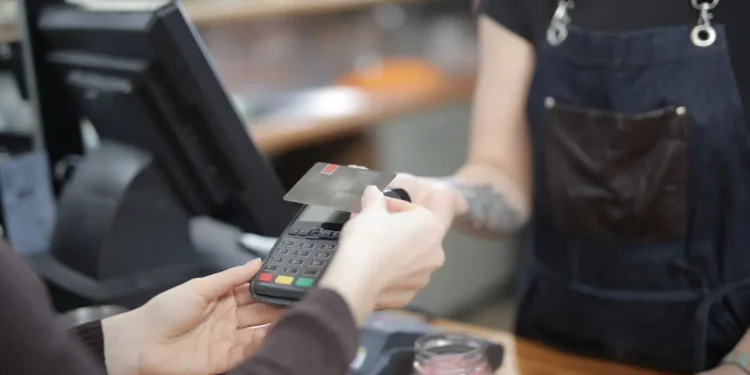
You’re at a coffee shop, ordering your usual medium latte, and when you go to pay, the tablet spins around with tip options starting at 18%. For a coffee. That took 30 seconds to make.
You hover over the screen, suddenly feeling like everyone behind you is judging your decision, while the barista pretends not to watch.
Sound familiar? If you’ve felt increasingly confused about when, where, and how much to tip, you’re not alone. Tipping culture has exploded beyond traditional restaurants and salons into virtually every transaction, leaving many of us wondering:
Is this fair?
Are we being guilt-tripped into subsidizing wages that employers should be paying?
Here’s the reality: tipping is often expected, but whether it’s fair depends entirely on the context. Some workers genuinely rely on tips to survive because they’re legally paid below minimum wage, while others are earning full wages, and the tip prompts are just… well, prompts.
Today, we’re going to explore when tips are warranted, which industries depend on them versus which ones are just trying their luck, and the latest legal developments that are reshaping tipping norms across the country.
The Legal Backdrop: Tips, Wages & Legislation
Before we dive into the etiquette, let’s talk about the economics behind tipping, because this is where things get really eye-opening.
The U.S. Tipped Minimum Wage Reality
Here’s a number that might shock you: the federal minimum cash wage for tipped workers is just $2.13 per hour. That’s not a typo. While the standard federal minimum wage is $7.25 per hour, restaurant servers, bartenders, and other tipped employees can legally be paid less than three dollars an hour, with the expectation that tips will bring them up to at least minimum wage.
If their tips don’t add up to minimum wage? Technically, employers are supposed to make up the difference. But here’s the problem: wage theft is incredibly common in tipped industries. Many employers either don’t track this properly or simply ignore the requirement, leaving workers to absorb the loss.
This system essentially makes customers responsible for ensuring workers earn a living wage, which explains why you feel so much pressure at that tip screen.
The “No Tax on Tips” Development
In a significant policy shift, the No Tax on Tips Act passed the Senate in May 2025 and was signed into law on July 4th. This eliminates federal tax on eligible tip income up to $25,000, affecting approximately 4-5% of U.S. workers.
Sounds great for tipped workers, right? Well, critics are raising some important concerns.
They worry this could actually strengthen the subminimum wage system by making it more attractive for employers to keep workers in tip-dependent roles rather than paying proper wages.
There’s also concern that employers might start reclassifying regular wage positions as “tipped” positions to take advantage of the tax benefits.
The bottom line? While this might put more money in tipped workers’ pockets in the short term, it could reinforce a system that many argue is fundamentally unfair.
Regional Reform: Washington D.C.’s Bold Move
Not everywhere is doubling down on tipping culture.
Washington, D.C. voters approved Initiative 82 in November 2022, which is phasing out the tipped subminimum wage entirely. By 2027, tipped workers in D.C. will earn the same minimum wage as everyone else – projected to be $17.95 per hour.
This is a completely different approach: pay workers a living wage and let tips be actual bonuses for exceptional service, not subsidies for basic survival.
So When Should You Tip – and Where?
This is where the rubber meets the road. Here’s a breakdown of tipping expectations across different industries:
|
Industry / Service |
Tip Expected? |
Standard Rate or Notes |
|
Full-service restaurant server |
Yes |
15-20% of pre-tax bill |
|
Buffet servers (beverages only) |
Often |
10-15% |
|
Cafe / fast-casual staff |
Optional |
Often rounds or $1-$2 in apps |
|
Food delivery drivers |
Yes |
Regional norms ~10-15% |
|
Salon / spa stylists, barbers |
Yes |
15-20% typical |
|
Taxi / rideshare drivers |
Yes |
~10-20% standard |
|
Fast-food counter / drive-thru |
No |
Tipping is not expected |
|
Grocery clerks / cashiers |
No |
(Even if prompted by app) |
The key pattern here?
Services where workers traditionally earn subminimum wage or depend heavily on tips for their income still warrant tipping.
Places where workers earn regular wages? The tip prompts are often just wishful thinking.
The Why: Etiquette, Economics & Ethics
Why We Tip (The Uncomfortable History)
The history of tipping in America is more problematic than most people realize.
Tipping became institutionalized after the Civil War as a way to avoid paying fair wages to Black workers, particularly in service industries. What started as a form of wage suppression became so embedded in our culture that we now consider it normal.
Today, many tipped workers genuinely rely on gratuities to earn livable pay, and consumers often unwittingly make up the wage gap that employers should be filling. When you tip your server, you’re not just being polite – you’re literally helping them pay rent.
Why Some Don’t (The “Tip Creep” Phenomenon)
But here’s where things get frustrating: “tip creep” is real, and it’s expanding everywhere. Those tip prompts are now showing up at coffee shops, retail registers, fast food counters, and even medical offices.
We’re being asked to tip for routine transactions where workers already earn minimum wage or higher.
Customers are increasingly resenting this guilt-based tipping culture, especially when it’s clear that the extra money isn’t going to workers who actually need it to survive.
There’s a difference between supporting an underpaid server and padding the profits of a business that’s already paying fair wages.
Industry-by-Industry Deep Dive
1. Restaurants & Food Service
This is tipping ground zero. Full-service restaurant workers genuinely depend on tips because they’re paid that $2.13 base wage. The standard 15-20% isn’t arbitrary – it’s what allows servers to earn a living wage.
Here’s the etiquette: 15-20% is standard for good service. Going below 10% signals serious dissatisfaction with the experience. And yes, you should tip on the pre-tax amount, not the total with tax included.
For large parties, many restaurants add automatic gratuities (usually 18-20%), which is fair given the extra work involved in coordinating big groups.
2. Salon & Spa Services
This is another traditional tip-based profession where stylists, massage therapists, and estheticians often rely heavily on tips. Many of these workers rent their stations or work as independent contractors, so tips make up a significant portion of their income.
The new tax legislation specifically includes beauty services in its tip deduction provisions, acknowledging how central tipping is to these industries.
3. Delivery & Gig Work
Food delivery drivers and gig workers are in a tricky spot.
Some earn regular wages plus tips, while others depend almost entirely on tips and delivery fees to make money. Platform fees often don’t go to the driver, so your tip can make or break their income for that delivery.
This is especially important to remember during bad weather or peak times when drivers are taking on extra risk and dealing with higher demand.
4. Retail, Coffee Counters & Drive-Thru
Here’s where tip creep gets annoying.
While some apps prompt for tips at coffee counters or retail locations, these workers are generally protected by regular minimum wage laws. The tip is truly optional and should be based on exceptional service, not guilt.
That said, if your barista remembers your complicated order perfectly or goes above and beyond, a small tip is a nice gesture – just don’t feel obligated by a screen prompt.
5. Transportation & Travel
Taxi drivers, rideshare drivers, hotel bellhops, and similar service workers typically depend on tips as part of their expected income.
These are situations where tipping is customary, and the lack of a tip may genuinely impact someone’s livelihood.
Where to Draw the Line
Tip Based on the Role and Wage Structure
Here’s my simple rule: if workers earn subminimum wage or genuinely rely on gratuities to reach living pay, tip generously. If workers are paid full minimum wage or higher, tipping should be optional and based on the quality of service you received.
Be Aware of Emerging Norms & Tech Prompts
Don’t let automatic guilt-tripping from kiosks or receipt prompts pressure you into tipping when it doesn’t make sense. Those prompts are often programmed by businesses hoping to increase revenue, not necessarily because their workers need the extra income.
Personal Ethics & Fairness
At the end of the day, if service is outstanding and you know the worker is underpaid, tipping remains a way to ethically support them. But you shouldn’t feel guilty about not tipping for routine transactions where workers are already earning fair wages.
Tipping Culture: Final Thoughts & Takeaways
Tipping isn’t just about etiquette.
It’s deeply woven into labor economics and how certain industries structure compensation. The reason these conversations feel so charged is that there’s real money and real livelihoods at stake.
When you’re unsure whether to tip, ask yourself:
- Does this worker rely on gratuities to earn a living wage?
- Are they providing personal service that goes beyond a basic transaction?
If the answer is yes, tip generously. If the answer is no, don’t feel pressured by prompts or social expectations.
Legislative reforms like D.C.’s Initiative 82 and the federal tax changes may shift these norms over time, but until wages are fundamentally restructured across service industries, tipping remains a vital support system for many low-paid workers.
The goal isn’t to be cheap or overly generous. It’s to be informed and intentional about when and why you’re tipping. Understanding the system helps you make choices that align with your values while supporting workers who genuinely depend on your generosity.
7 Ways to Adjust if You’re Having Trouble Getting Work as a Freelancer