



We’ve all heard about the importance of self-care for our mental and physical health, but what about our financial health?
Just as you might have a skincare routine or a workout regimen, establishing a financial self-care routine can do wonders for your fiscal well-being.
Let’s dive into how you can create a routine that keeps your finances in check and your money mindset positive!
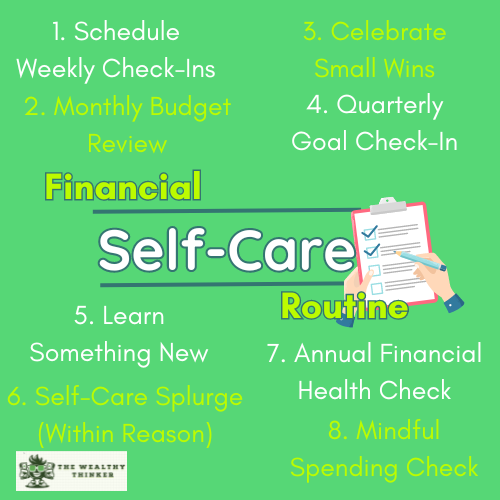
Why Financial Self-Care Matters
Before we jump into the ‘how’, let’s talk about the ‘why’.
A regular financial self-care routine can:
- Reduce money-related stress and anxiety
- Help you stay on track with your financial goals
- Prevent small issues from becoming big problems
- Foster a positive relationship with money
- Empower you to make informed financial decisions
Now, let’s build your financial self-care routine!
1. Schedule Weekly Check-Ins
Pick a day and time each week for a quick financial check-in.
This doesn’t need to be a marathon session – even 15 minutes can make a difference. During this time:
- Review your recent transactions
- Check your account balances
- Make sure all bills are paid or scheduled
Pro Tip: Make it enjoyable! Pair your check-in with something you love, like your favorite coffee or a relaxing playlist.
2. Monthly Budget Review
Once a month, take a deeper dive into your finances:
- Review your budget categories
- Compare your actual spending to your planned spending
- Adjust your budget if needed
- Check progress on your savings goals
Remember, a budget is a living document. It’s okay to make changes as your life and priorities shift.
3. Celebrate Small Wins
Financial progress often happens in small steps. Take time to acknowledge and celebrate your wins, no matter how small:
- Paid all bills on time this month? That’s a win!
- Resisted an impulse purchase? Celebrate it!
- Put an extra $10 in savings? Do a happy dance!
Consider keeping a “Financial Wins” journal to record these moments. On tough days, it can be encouraging to look back and see how far you’ve come.
4. Quarterly Goal Check-In
Every three months, review your bigger financial picture:
- Assess progress on long-term financial goals
- Review and rebalance your investments if needed
- Check your credit report (you can get a free report from each bureau once a year)
- Evaluate any subscriptions or recurring payments – cancel what you don’t need
5. Learn Something New
Make financial education a part of your routine:
- Read a personal finance article weekly
- Listen to a money podcast during your commute
- Watch videos from reputable financial experts
The more you know, the more empowered you’ll feel to make smart financial decisions.
6. Practice Gratitude
Cultivating financial gratitude can shift your money mindset from scarcity to abundance:
- Each day, note one thing you’re financially grateful for
- Appreciate the non-monetary abundance in your life
- Reflect on how far you’ve come on your financial journey
7. Self-Care Splurge (Within Reason)
Yes, splurging can be part of financial self-care!
Set aside a small amount each month for a guilt-free treat. This could be:
- A nice meal out
- A small purchase you’ve been eyeing
- An experience you’ve been wanting to try
The key is to plan for it and enjoy it fully, without derailing your larger financial goals.
8. Annual Financial Health Check
Once a year, do a comprehensive review of your financial health:
- Review and update your net worth statement
- Check if your insurance coverage is adequate
- Update your will or estate plan if needed
- Set financial goals for the coming year
- Celebrate your progress over the past year
Make it an event! Treat yourself to a nice meal or a day off to focus on this important task.
Net Worth: What is it & How Do You Know What Yours is
9. Mindful Spending Check
Regularly ask yourself these questions before making purchases:
- Does this align with my values and goals?
- Will this bring lasting joy or just momentary pleasure?
- Is there a more cost-effective way to meet this need?
This practice can help you make more intentional spending decisions.
10. Financial Buddy System
Consider finding a financial accountability partner:
- Share your goals with each other
- Check in regularly on your progress
- Celebrate wins together
- Offer support during challenges
Having someone to share your journey can make it more enjoyable and help you stay on track.
Remember, Your Routine Should Work for You!
The key to a successful financial self-care routine is consistency and personalization. Start with a few elements that resonate with you and gradually build your routine.
It’s okay to adjust as you go – what matters is that you’re regularly engaging with your finances in a positive way.
Financial self-care isn’t about perfection; it’s about progress.
By establishing a routine that works for you, you’re taking important steps towards financial well-being. So go ahead, show your finances some love – your future self will thank you!